reduction in neurosurgical turnover times
savings opportunity from 10-minute TOT reduction
identified due to equipment-related delays
Background
Salford Royal, part of the Northern Care Alliance NHS Foundation Trust, is a large university teaching hospital in Northwest England and home to one of the UK’s biggest and most advanced neurosurgery departments. With 23 consultant (attending) neurosurgeons and sub-specialty expertise across vascular, spinal, skull base, pituitary, oncological, and functional neurosurgery, the department serves as a key tertiary referral center for the North West and beyond. To support this high-complexity environment, Salford Royal launched a major initiative with Incision to improve their neurosurgical team efficiency and reduce operating room (or operating theatre) delays.
The initiative focused on identifying and driving practical improvements in daily neurosurgical case preparation, using Incision Assist to organize and share detailed surgical workflows and surgeon preferences across teams. Rather than a top-down approach, it centered on enabling incremental, team-driven improvements that influence how neurosurgical lists run, while supporting teams to build on the processes and workflows they already use. Here, we describe some of the early results of the collaboration and trial.
“As one of the biggest and most specialized neurosurgical centers in the UK, reducing delays is a major priority for us. With over 20 consultant neurosurgeons—each with their own specific way of working—every case adds a layer of complexity for the team. How we prepare for each procedure is key to both successful outcomes and day-to-day efficiency, and that’s exactly what we recognized in Incision and the Assist platform.”
– Lee Bennett, Associate Director Perioperative Care, Northern Care Alliance NHS Foundation Trust
Undercovering Drivers of Delay
To better understand the scale and root causes of delays, Incision conducted a 12-month analysis using process mapping and operational data extracted from the hospital’s electronic health record (EHR) system.
A total of 861 delays recorded for neurosurgical procedures in 2024 were identified, categorized, and reviewed, reflecting a complex mix of operational, clinical, and staffing-related challenges (Figure 1). As seen in many retrospective EHR-based reviews, the largest single category was "unknown," reflecting incomplete or missing documentation [1]. Among identified causes, patient-related delays (17.7%), staffing-related delays (13.1%), and surgeon-related delays (12.6%) form a significant burden, representing complex realities such as rota gaps and conflicting clinical priorities.
Within the identified categories, equipment-related delays offered the clearest opportunity for action, accounting for 14.4% of total delay time. These ranged from instruments not ready at the start of a case to competition for shared resources such as microscopes. Notably, equipment-related delays were among the longest delay types, with an average duration of 54 minutes.
In total, equipment-related delays amounted to 94 hours and 7 minutes of lost operating time—equivalent to nearly 12 full working days (based on 8-hour shifts). Applying the NHS reference cost of £1,200 per OR/theatre hour, this translates to an annual opportunity cost of £112,940. This is likely a very conservative estimate, as it’s based on 2019 NHS benchmarks [2].
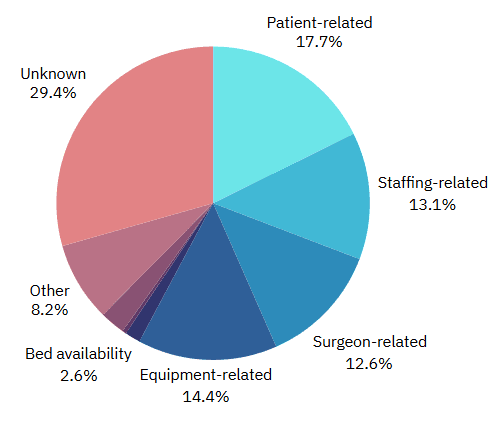
Figure 1: Categories of Neurosurgical Case Delays (Jan–Dec 2024)
“We identified equipment-related issues as low-hanging fruit to improve our theatre utilization. It’s a key area where we could make measurable improvements quickly—and where our teams needed support the most. Our partnership with Incision directly enables us to do this, with case-specific equipment and materials information forming a key part of the Assist platform.”
– Senior Scrub Practitioner, Neurosurgery, Salford Royal NHS Hospital
Improving Turnover in High-Acuity Lists
Neurosurgical procedures often involve long case durations with only one or two turnovers per list, making transitions between cases relatively fewer but by no means less critical. Even small delays can have significant downstream effects, pushing second- and third-case patients beyond their scheduled starts or into costly overtime, and frustrating staff and patients alike. Previous research by Incision has shown significant improvements in turnover times with the use of Assist, particularly in high-volume surgical settings. One large-scale study demonstrated a 15% average reduction in turnover times across all surgical specialties at a medium-sized hospital [3]. But how does this translate to high-complexity, lower-volume environments like neurosurgery?
To evaluate early impact, average turnover times in the neurosurgical department were compared before and six months after introducing Assist. Despite being in the early stages of implementation, turnover times fell by more than 13%—far exceeding the 2.2% reduction observed across other specialties during the same period (Figure 2). These align closely with Incision’s broader research findings.
Using the same NHS benchmark, a 10-minute reduction in turnover equates to a £200 saving per case. For a hospital performing approximately 7,000 neurosurgical procedures per year, this represents an annual opportunity cost saving of around £1.4 million.
While time saved during turnover does not directly translate into space for extra cases, especially in lower-volume lists, it remains a critical marker of process efficiency. Eliminating avoidable delays frees up valuable time for other clinical priorities, helps limit overtime, and reduces frustration for surgeons and teams.
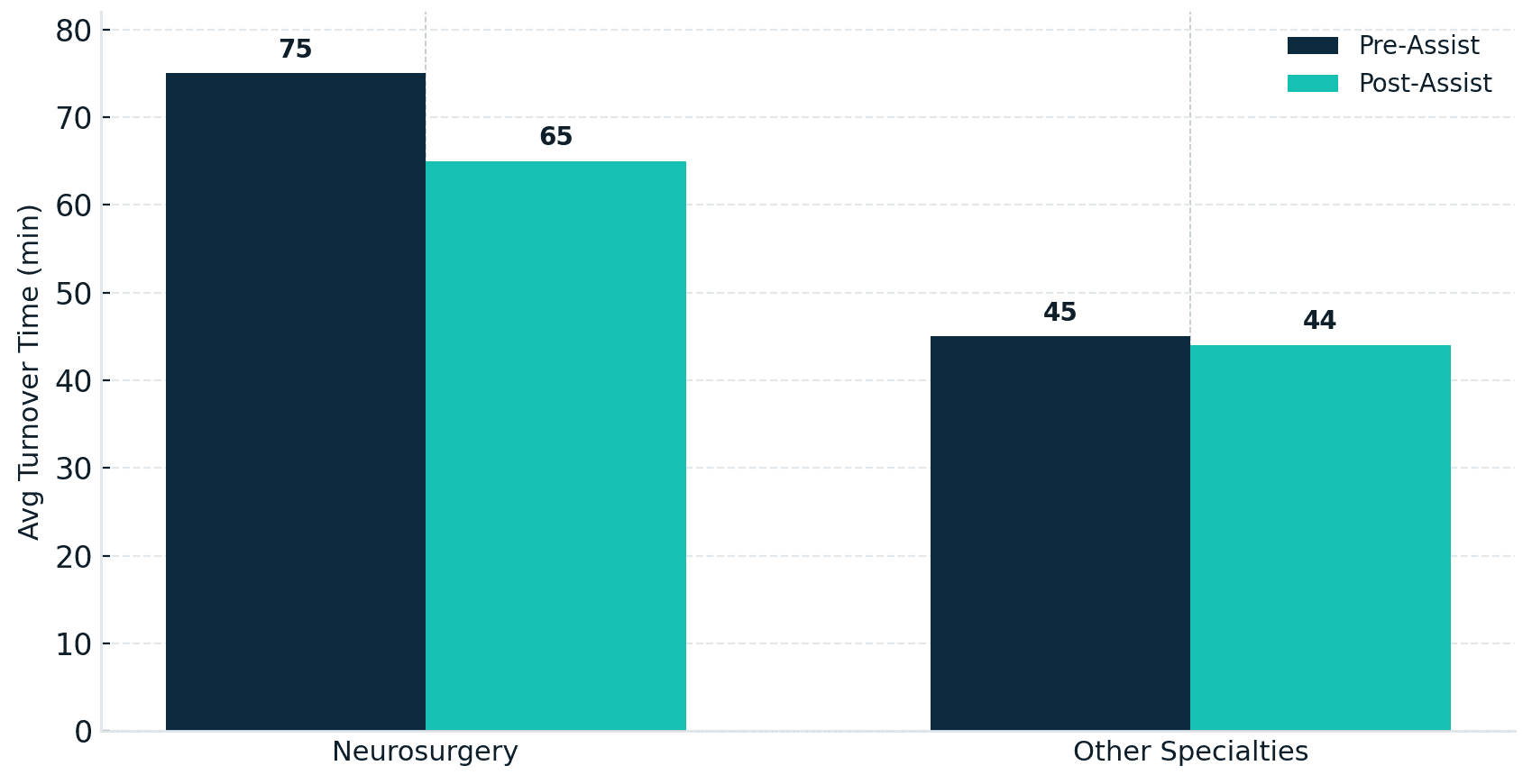
Figure 2: Comparison of Pre- and Post-Assist Turnover Times
Shifting the Performance Paradigm: A Team-First Approach
Despite major operational progress elsewhere in surgical services, the bottom-line impact of daily preparation and case setup is still frequently overlooked. The role of technological solutions in augmenting and supporting this element of team performance—and in driving efficiency initiatives such as improving turnover and reducing delays—represents a significant and cost-efficient evolution.
Incision Assist supports frontline staff with clear, visual, case-specific guidance that strengthens performance across key daily workflows. By helping standardize preparation and reduce avoidable delays, teams deliver care more efficiently and predictably. Hospitals using Assist consistently report stronger team dynamics, greater confidence, improved preparedness, and lower stress levels [4].
As surgical services worldwide face increasing pressure to do more with less, Assist offers a practical, scalable, and human-centered path to sustainable performance improvement. By enhancing—not replacing—existing systems, it supports frontline teams to work confidently and efficiently, saving time and improving outcomes, as reflected in these early results at Salford. At the time of writing, the organization is in a trial period and is investigating funding for formal implementation.