How We Create SPD E-learning Courses: Behind the Launch of the Specialty Instrumentation Program in MySPD
We recently launched the Specialty Instrumentation Program within MySPD, consisting of eight new e-learning courses. These courses now sit alongside the other e-learning modules and competency tracking tools available in MySPD℠.
MySPD is a standardized digital education and competency tracking program designed specifically for sterile processing departments. It combines industry-aligned standard operating procedures (SOPs), real-time competency tracking, and structured e-learning, all in one platform. Managers gain clear visibility into staff progress, audit readiness is simplified, and teams have access to consistent, continuing education, and (CE)-approved courses.
But what does it actually take to create an SPD e-learning program like the Specialty Instrumentation Program?
When you open one of these courses, you see structured chapters, detailed visuals, 3D animations, and step-by-step guidance connected to daily practice. What you don’t see is the months of preparation, filming, writing, animating, and validation that made it possible.
Let’s take you behind the scenes.
It starts with understanding the audience
Every e-learning program begins with one essential question: what does someone in sterile processing need to understand in order to work confidently and safely?
For the Specialty Instrumentation Program, that meant diving deep into complex instruments that demand precise reprocessing steps. Our content team reviewed industry guidelines, certification requirements, and best practices, while collaborating closely with SPD leaders and educators to ensure relevance to real-world workflows.
As Aimee Space, RN, BSN, Product Owner Medical Content at Incision, explains, “We emphasize practical skills and real-world applications, focusing on the why behind the action. Patient safety is always front and center.”
Over several months, this research was shaped into a detailed program plan covering all eight courses. Before filming began, more than 55,000 words had been written. Every explanation, learning objective, and visual sequence was mapped out in advance.
By the time we entered the SPD to shoot, the blueprint was clear.
Filming in real Sterile Processing Departments
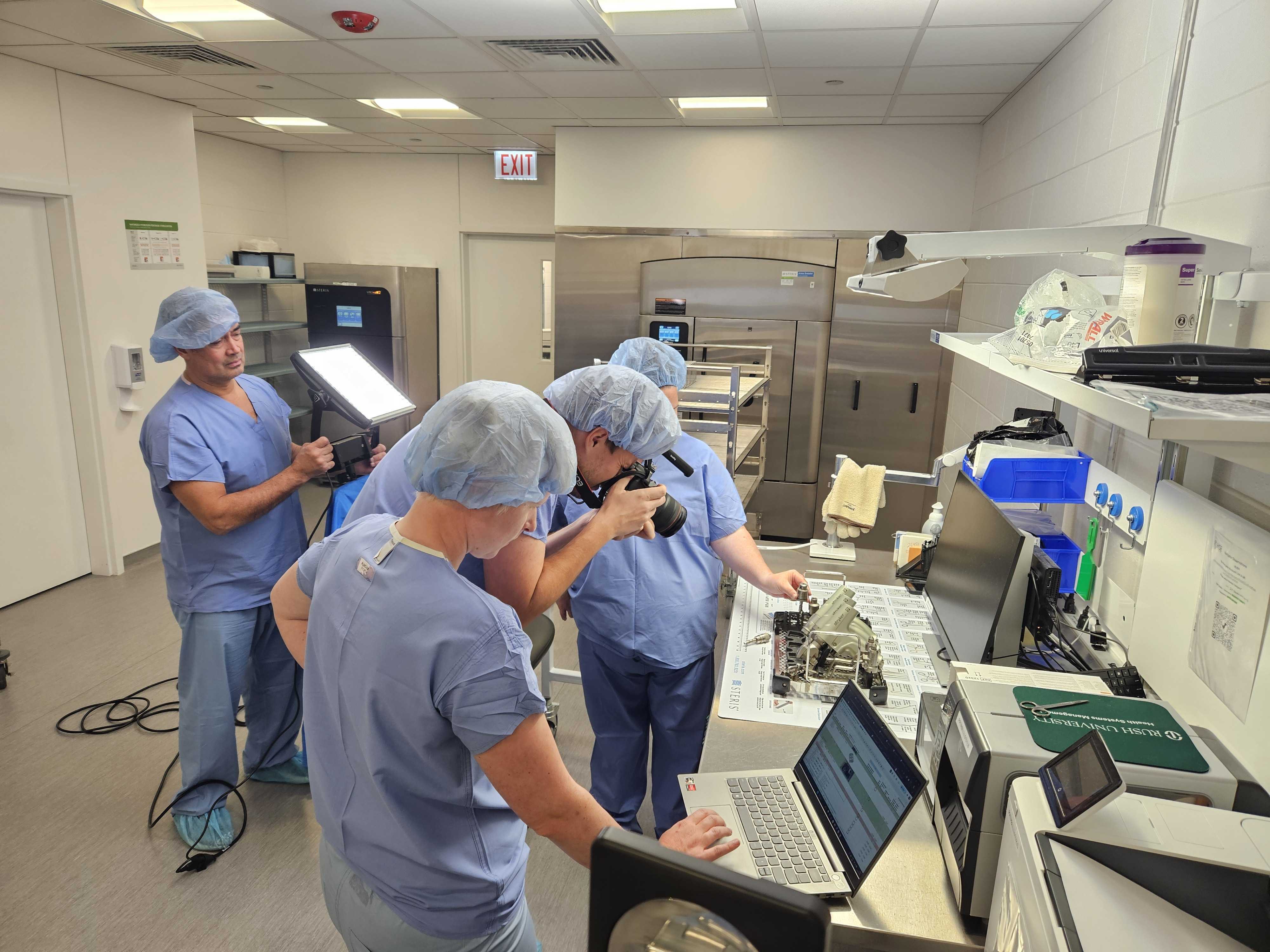
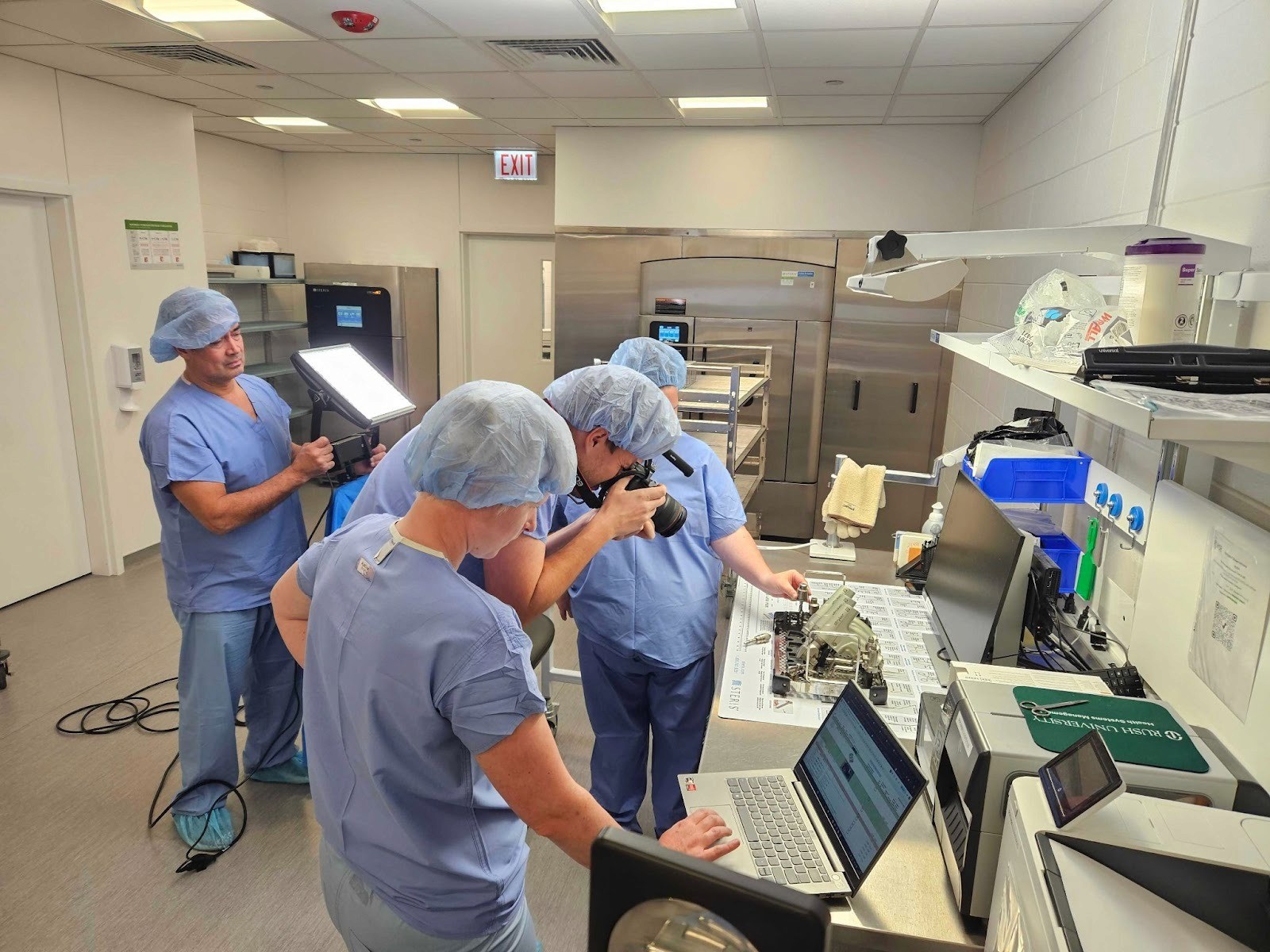
To reflect real practice, filming takes place in active hospital SPD environments.
During the Specialty Instrumentation Program shoot alone, we captured 332 minutes of raw footage, more than five and a half hours of material. We also took over 3,000 high-resolution photos. These included detailed inspection steps, close-ups of specialty instrument mechanisms, tray configurations, assembly sequences, cleaning techniques, and complete workflow demonstrations.
Hannah Spencer, Medical Content Creator, describes it this way: “By the time we arrive in the SPD, we know every image and clip we need. The master document becomes our checklist. We work through each step carefully to make sure it’s accurate and clear.”
Throughout the shoot, techniques are continuously validated, small details are adjusted, and every visual is captured with intention. When explaining specialty instruments, precision is not optional.
Making the invisible visible with 3D animation
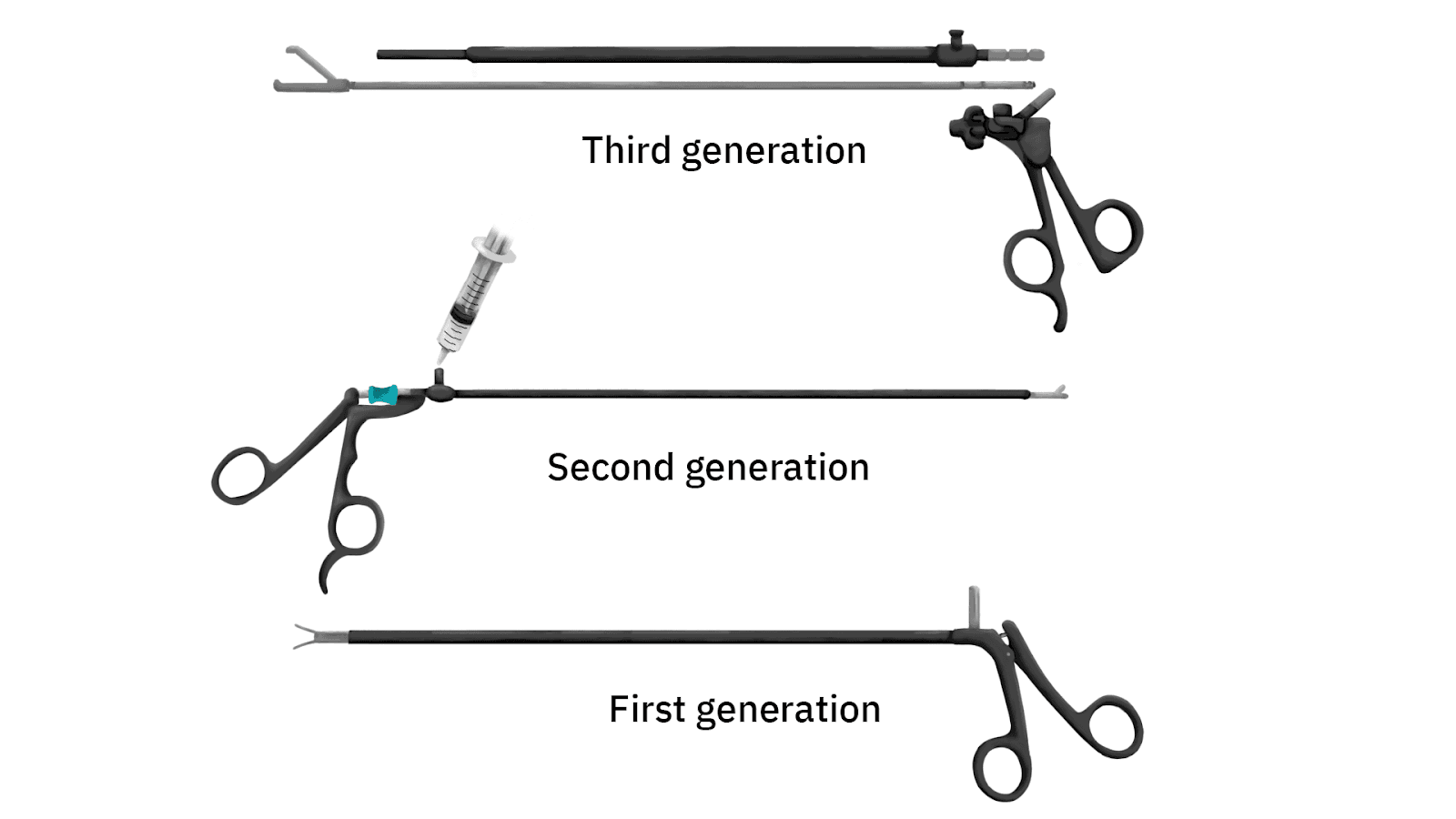
Some instrument mechanisms cannot be fully understood from the outside. Hinges, channels, internal components, and locking systems often require deeper visualization. To support that level of understanding, we develop detailed 3D animations in-house.
For this program, approximately 50 gigabytes of 3D data were created to build accurate digital models of specialty instruments. These animations allow learners to see inside complex mechanisms, understand how parts interact during cleaning, inspection, and assembly, and connect the instrument to how and when it is used during a surgical procedure.
That connection matters. When technicians understand not just how an instrument is constructed, but also how it functions and how it impacts a patient, their work takes on a deeper context. The purpose of 3D animation is not to make the content look advanced. It is to make it meaningful and understandable. When professionals can visualize how an instrument functions, how it is used, and why each component matters, inspection points and critical checks become clearer and more intuitive.
From raw material to structured learning in MySPD
After filming and animation production, the editing phase begins.
Sacha Odufre, our video editor, reviews every minute of footage, refining pacing and aligning visuals precisely with voiceovers. Content writers and reviewers ensure that explanations are consistent, clinically accurate, and easy to follow.
Each course then undergoes multiple internal reviews and external validation with SPD experts. Because all content within MySPD is CE-approved by HSPA and CBSPD, it must meet rigorous educational standards.
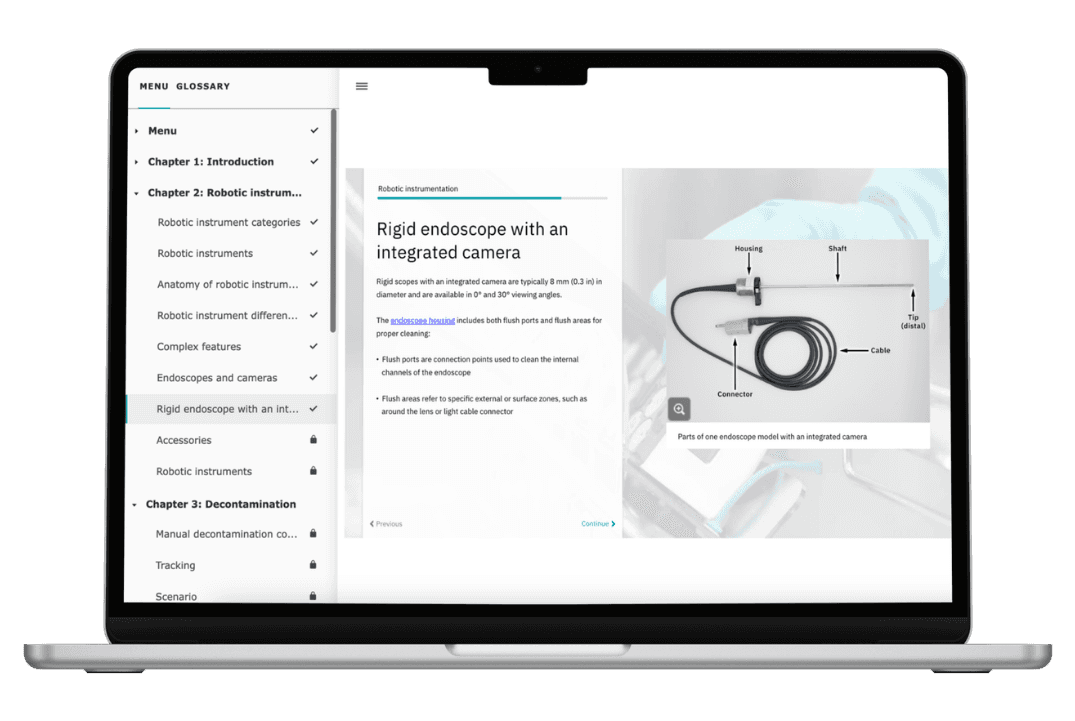
Only after this full review process are the courses integrated into MySPD, where they become part of a broader ecosystem of e-learning courses, competency tracking, SOP integration, and audit-ready reporting.
The result is not just video content. It is a structured, trackable learning pathway embedded within a standardized competency framework.
As Hannah Spencer reflects, “When everything comes together: the research, the filming, the animations, the editing; you see how much care goes into every detail. We’re incredibly proud of the content we create, but more importantly, we’re proud that it supports SPD professionals in doing their jobs with confidence every single day.”
Why this matters for SPD teams
Specialty instruments add complexity to already demanding workflows. They require an increased level of conscientiousness, gained through technical understanding and knowledge.
By combining real-life footage, detailed photography, 3D animation, and structured assessments within MySPD, the Specialty Instrumentation Program was designed to support exactly that: clarity, competence, and confidence.
Creating an SPD e-learning program is not simply about producing videos. It is about supporting the professionals who safeguard every surgical instrument before it reaches a patient.
When someone in sterile processing understands not just what to do, but why they are doing it, their confidence grows. And when confidence grows, patient safety is strengthened.
Want to know more about how we can support your SPD team? Feel free to reach out to Guido Danen via guido.d@incision.care or visit www.incision.care to learn more.
MySPD℠ is a service mark of STERIS.