How SPD Leaders Use MySPD to Strengthen Orientation, Education, and Competency Management
Today, sterile processing departments face increasing complexity. Staffing shortages continue, certification requirements vary by state, and many technicians enter the field with little prior SPD experience, while others bring years of experience shaped by different training pathways. At the same time, standards continue to evolve and audits grow more rigorous.
In the middle of all this, SPD teams remain a critical part of safe surgical care. Nearly every instrument used in the operating room has been cleaned, inspected, and prepared by SPD professionals, and every step in that process directly impacts patient safety. That responsibility deserves the right level of support.
In a recent conversation with Karyn Wippler, Customer Success Manager at Incision, she described three main ways hospitals use MySPD.
“We see customers using MySPD in three main ways: orientation, continuous education, and standardization.”
Together, she explained, these use cases create a practical framework that helps departments build consistency, maintain quality, and better support their teams.
In this blog, we’ll take a closer look at how each of these use cases supports SPD teams and leadership in their day-to-day work.
Orientation with clarity and confidence
Sterile processing departments regularly welcome new team members who need to build knowledge and confidence quickly in a safety-critical environment.
“In some states, someone can start working in SPD without prior clinical training,” Karyn explained. “That makes structured orientation even more important from day one.”
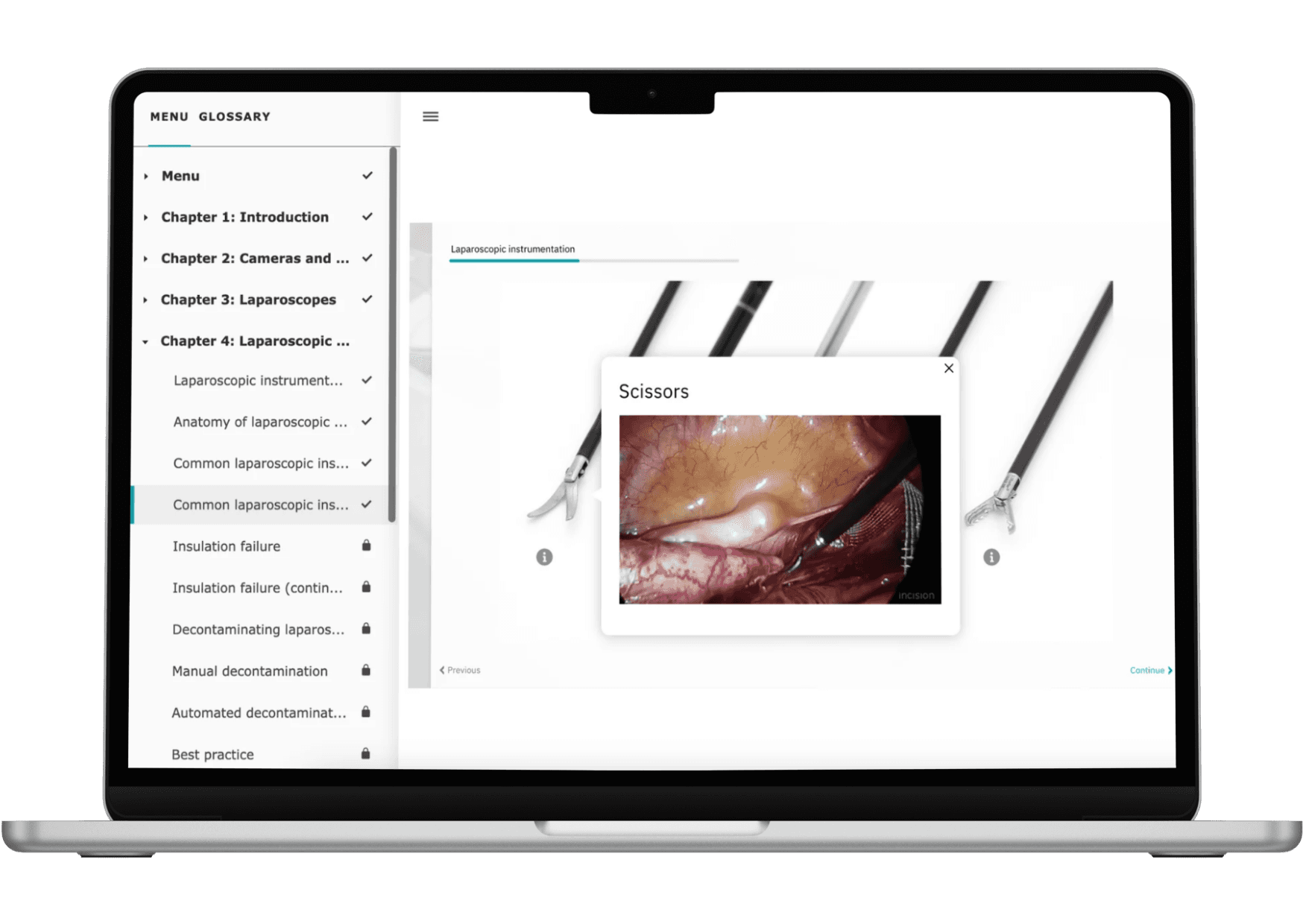
MySPD helps provide that foundation through more than 35 multimedia e-learning courses covering topics ranging from foundational knowledge to current best practices, including advanced areas such as endoscope handling and specialty-specific instrumentation. Courses are approved for HSPA and CBSPD CE credits, helping departments support certification pathways regardless of local regulatory requirements.
Alongside existing orientation and mentorship, MySPD adds a consistent, visual layer of learning. Through clinical footage and 3D animations, learners can better understand how instruments are used during surgery, what to look for during inspection, and how different parts interact during cleaning and assembly.
When professionals can visualize that connection, inspection points and critical checks become clearer and more intuitive.
As Karyn put it, “It helps bridge that initial knowledge gap so new techs aren’t just memorizing steps. They understand why those steps matter.”
Some health systems use MySPD to build foundational knowledge before technicians even pursue certification. That early structure reduces stress, builds confidence, and helps new team members become productive and independent more quickly.
Continuous education that keeps teams up to date
Sterile processing does not stand still. Guidelines change, equipment evolves, and new technologies continuously enter the department. Ongoing education helps ensure that teams stay current as best practices and expectations evolve, regardless of experience level.
“You can have very experienced people in the department who were trained years ago,” Karyn explained. “Continuous education is less about re-learning and more about staying aligned.”
MySPD makes ongoing education manageable by integrating professional development into daily workflows rather than treating it as a separate event. Managers can use the platform not only for department-wide re-education, but also to assign targeted courses when they identify specific gaps in knowledge or performance.
Health systems such as OhioHealth have implemented MySPD to strengthen staff knowledge and confidence across multiple sites. Significant improvements were seen across teams, including among staff with more than three years of experience, highlighting the value of continuous education at every level.
Read the full OhioHealth case study to learn how the health system strengthened SPD staff knowledge and confidence across 13 sites.
When professionals feel prepared, stress decreases, and performance improves. Rather than focusing on remediation, continuous education helps departments stay current, reinforce best practices, and maintain consistency across the team.
Standardization that supports quality and audit readiness
If orientation builds confidence and continuous education keeps teams up to date, consistency helps protect quality. For many SPD managers, maintaining that consistency across shifts, teams, and experience levels is one of the most challenging parts of the role. Without clear processes, small differences in technique or interpretation can gradually introduce risk.
“Standardization is a huge benefit of MySPD,” Karyn explained. “It ensures that everyone is trained using the same methods and up-to-date information.”
MySPD supports this by connecting education directly to current standards and your department’s Standard Operating Procedures. The platform includes a library of industry-compliant SOPs and modular competencies with tracked acknowledgments and clear evaluations. To ensure content remains aligned with evolving guidelines and best practices, materials are reviewed quarterly by a multidisciplinary STERIS committee.
At the core of this are competencies, which ensure that training goes beyond theory. Technicians are not only expected to understand a process, but also demonstrate how tasks should be performed correctly, step by step, in line with department procedures.
In sterile processing, that level of clarity matters. Whether it involves handling chemicals, following detailed cleaning steps, or assembling complex instruments, small deviations can have real consequences. By embedding competencies alongside education, MySPD helps teams apply standards consistently in day-to-day work.
“Competencies are about both understanding and performance,” Karyn said. “It’s making sure people know why something is important and can demonstrate that they can do it correctly.”
This becomes especially important during audits. Accrediting bodies closely examine sterile processing practices because of their direct connection to patient safety. Documented education and competencies provide clear evidence that staff are trained consistently and that processes align with policy, helping reduce risk and support audit readiness across the organization.
For SPD managers and clinical leaders, that visibility brings reassurance. Leaders can clearly see who has completed training, who has demonstrated competency, and where additional support may be needed.
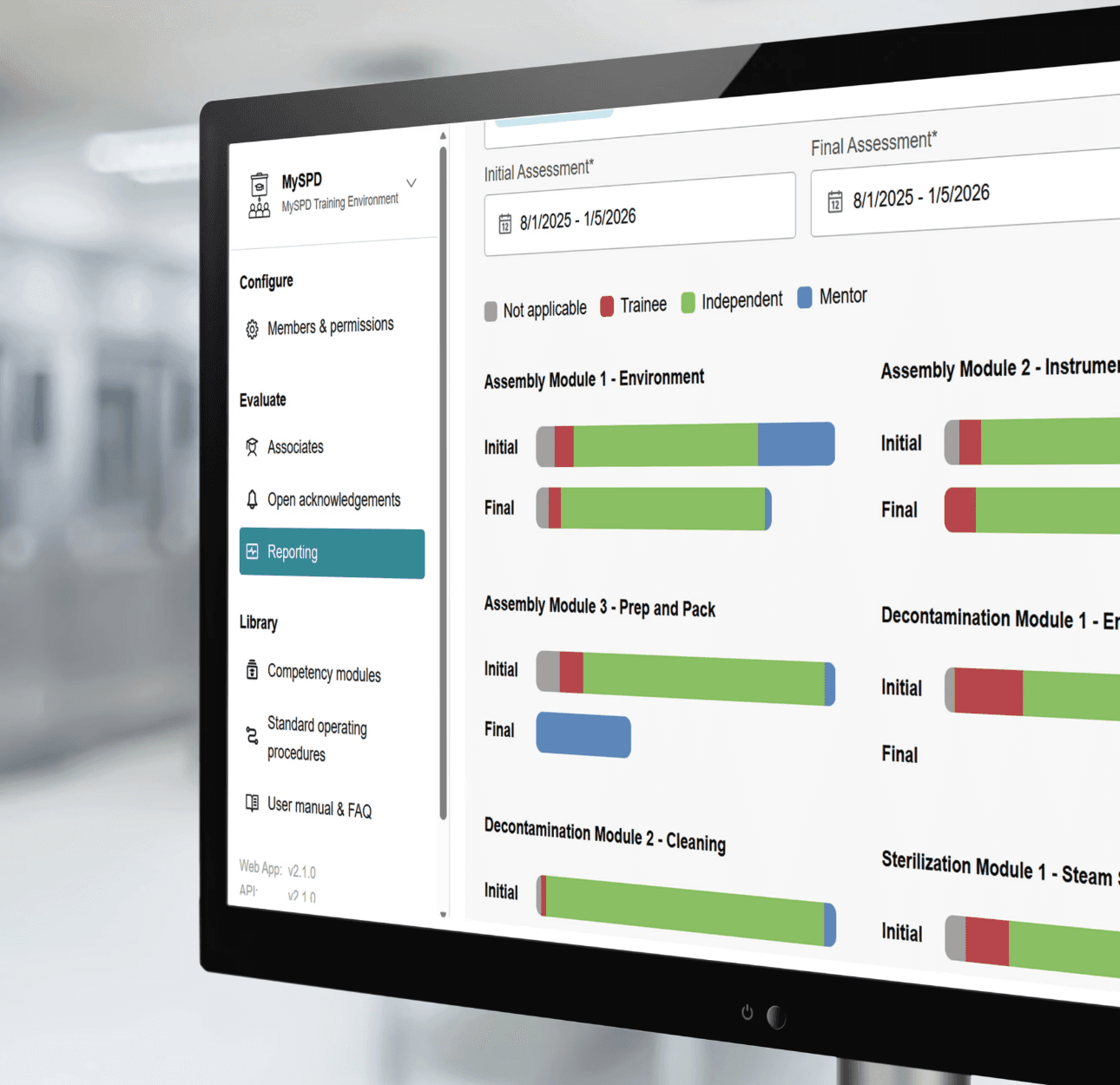
In many departments, competencies are still tracked manually or on paper, creating an administrative burden and making oversight difficult. By digitizing this process, MySPD reduces manual workload while giving leaders real-time insight into team readiness and compliance. That visibility not only supports day-to-day management but also removes significant stress when preparing for audits.
A stronger culture in sterile processing
Orientation, continuous education, and standardization are closely connected. Strong orientation builds confidence early, ongoing education keeps teams current, and consistent ways of working help ensure that every technician follows clear expectations regardless of experience level.
MySPD is designed specifically for sterile processing professionals and recognizes the complexity of the work they do every day. By combining structured education with competency management, the platform helps departments build teams that are not only knowledgeable, but also easier to align, oversee, and prepare for audits.
Sterile processing remains essential to safe surgery. When teams have both the right educational foundation and the ability to apply that knowledge consistently in practice, the entire hospital benefits.
Want to know more about how we can support your SPD team? Feel free to reach out to Jonathan Reimer via jonathan.r@incision.care or visit our MySPD website page to learn more.
MySPD℠ is a service mark of STERIS.